

Send Message
Privacy statement: Your privacy is very important to Us. Our company promises not to disclose your personal information to any external company with out your explicit permission.
 Suzhou Delfino Environmental Technology Co., Ltd.
Select Language
English
Ultrapure water is water produced by distillation, deionization, reverse osmosis technology or other appropriate supercritical fine technology for the purpose of developing ultrapure materials (semiconductor original materials, nanometer fine ceramic materials, etc.). Its resistivity is greater than 18MΩ.cm. , or close to 18.3MΩ.cm (25℃). Why does the electronics industry use ultrapure water equipment?
Ultrapure water plays an increasingly important role in the production of electronic components, mainly circuit boards. The quality of ultrapure water has become one of the important factors affecting the quality, production output and production cost of circuit boards and electronic components. In the production of electronic components, ultrapure water is mainly used for cleaning water and for preparing various solutions and slurries. Different electronic components have different requirements for pure water and water quality in the production. In the production of transistors and integrated circuits, ultrapure water is mainly used to clean silicon wafers, and a small amount is used to prepare chemical liquids, water vapor sources for silicon oxidation, cooling water for some equipment, and preparation of electroplating solutions.
80% of the processes in integrated circuit production require the use of high-purity water to clean silicon wafers. The quality of the water is closely related to the quality and production volume of integrated circuit products. Alkali metals (K, Na, etc.) in the water will cause the insulating film to withstand voltage, heavy metals (Au, Ag, Cu, etc.) will reduce the PN junction voltage, and Group III elements (B, Al, Ga, etc.) will cause the N-type semiconductor to Characteristics deteriorate. Group V elements (P, As, Sb, etc.) will deteriorate the characteristics of P-type semiconductors. It will deteriorate the characteristics of P-type semiconductors. The phosphorus (accounting for about 20-50% of the ash) after high-temperature carbonization by bacteria in the water will turn local areas of the P-type silicon wafer into N-type silicon, causing the performance of the device to deteriorate. If particles (including bacteria) are adsorbed on the surface of the silicon wafer, they will cause a short circuit or deteriorate the characteristics of the circuit. Therefore, it is necessary to use a conductivity analyzer to detect the conductivity, total dissolved solids, and resistivity values of water quality.
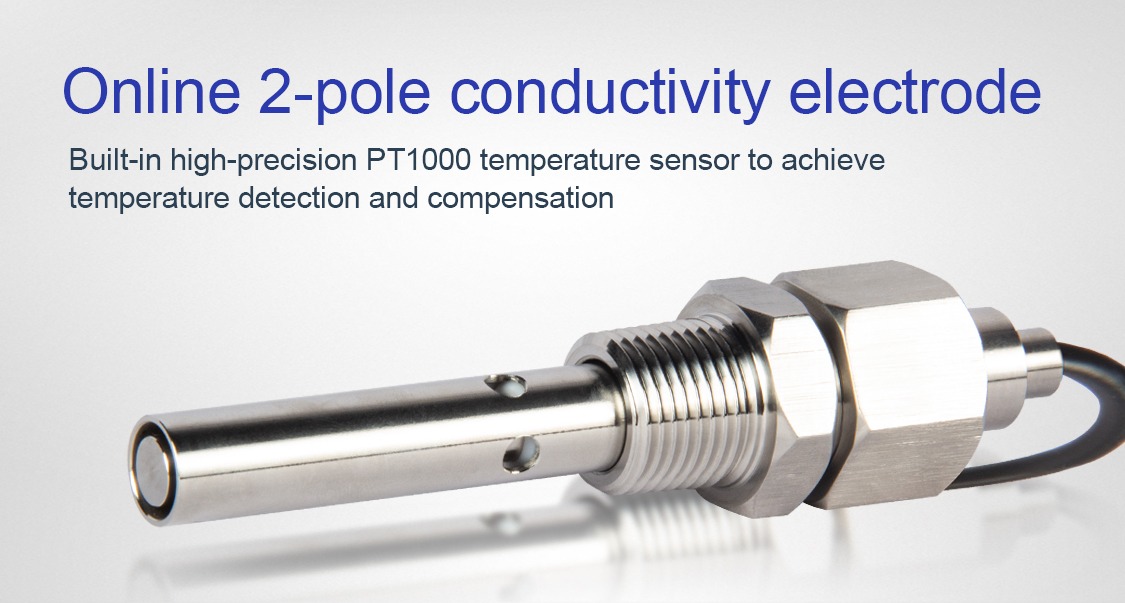
The application significance of ultrapure water in the electronics industry is to ensure the quality and safety of electronic products and promote the healthy operation of the electronics industry. Electronic ultrapure water equipment is used for the production of high-purity water for cleaning silicon wafers, semiconductor materials, and wafer materials in integrated circuit production, processing.
Grades of ultrapure water for the electronics industry
At present, my country's Ministry of Electronics Industry divides electronic-grade water quality technology into four industry levels, namely 18MΩ.cm, 15MΩ.cm, 12MΩ.cm, and 0.5MΩ.cm, to distinguish different water qualities. Semiconductors, integrated circuit chips and packages, liquid crystal displays, high-precision circuit boards, optoelectronic devices, various electronic devices, microelectronics industry, large-scale, and ultra-large-scale integrated circuits all require the use of large amounts of pure water, high-purity water, and ultrapure water for cleaning Semi-finished products and finished products. The higher the integration level of integrated circuits and the narrower the line width, the higher the requirements for water quality.
Ultrapure water production process for the electronics industry
1. The traditional water treatment method using ion exchange resin to prepare ultrapure water. The basic process flow is: raw water → sand carbon filter → precision filter → raw water tank → positive bed → negative bed → mixed bed (multiple bed) → pure water Water tank → pure water pump → post-precision filter → water point
2. Use a combination of reverse osmosis water treatment equipment and ion exchange equipment. The basic process flow is: raw water → sand carbon filter → precision filter → raw water tank → reverse osmosis equipment → mixed bed (multiple bed) → pure water Tank→pure water pump→post precision filter→water point
3. Use reverse osmosis water treatment equipment and electrodeionization (EDI) equipment to match. The basic process flow is: raw water→sand carbon filter→precision filter→raw water tank→reverse osmosis equipment→electrodeionization (EDI) )→Pure water tank→Pure water pump→Post precision filter→Water point
4. Use a combination of reverse osmosis water treatment equipment, electrodeionization (EDI) equipment and polishing mixed bed. The basic process flow is: pretreatment filter → security (precision) filter → RO reverse osmosis → EDI → nitrogen sealing Water tank → polishing mixed bed → new circulation pipe → water point
Characteristics of ultrapure water preparation process
The first type uses ion exchange resin, which has the advantages of low initial investment and occupying less space. However, the disadvantage is that it requires frequent ion regeneration, consumes a lot of acid and alkali, and causes certain damage to the environment.
The second type uses reverse osmosis as pretreatment and is equipped with ion exchange equipment. Its characteristic is that the initial injection time is higher than that using ion exchange resin, but the regeneration cycle of the ion equipment is relatively long, and the acid and alkali consumption is higher than that using ion resin alone. Way less. But it is still somewhat destructive to the environment.
The third method uses reverse osmosis as pretreatment and is equipped with an electrodeionization (EDI) device, which is not harmful to the environment. The disadvantage is that the initial investment is too expensive compared to the above two methods.
The fourth type uses reverse osmosis for pretreatment and is equipped with an electrodeionization (EDI) device, a nitrogen-sealed water tank and a polishing mixed bed. Among them, the nitrogen-sealed water tank can prevent CO2 and other substances from dissolving into the water and affecting the water quality, ensuring the water quality in the water tank. Avoid secondary pollution leading to water quality degradation. The polishing mixed bed uses nuclear-grade resin without chemical precipitation to remove residual traces of charged ions and weak electrolytes in pure water, making the water quality above 18MΩ.cm. The new circulation pipeline ensures that the water quality is not polluted. This is currently a very environmentally friendly ultrapure water production process. It can continuously produce ultrapure water without using acid and alkali for regeneration, and is not harmful to the environment.
Specific application areas of ultrapure water in the electronics industry
1. Use ultrapure water for semiconductor materials, devices, printed circuit boards and integrated circuit finished and semi-finished products.
2. Use ultrapure water for blending ultrapure materials and ultrapure chemical reagents.
3. Use ultrapure water in laboratories and pilot plants.
4. Surface polishing treatment of automobiles and home appliances.
5. Optoelectronic products.
6. Other high-tech fine products.
What are the standards for ultrapure water?
American ASTM D5127 Pure Water Quality TypeE-1.2 for Electronic Semiconductor Industry
China National Electronic Grade Ultrapure Water Standard GBT11446.1-1997EW-Ⅰ Standard
Delfino company focuses on the R&D and production of water quality analysis instruments. Our measurement parameters include pH ORP analyzer, conductivity analyzer, TDS, salinity sensors, dissolved oxygen analyzers, COD analyzer, ammonia nitrogen analyzer, turbidity analyzer, chlorophyll meters, blue-green algae meters, residual Chlorine Sensor, and Chlorine Dioxide Sensor. Our products can be applied to the ultrapure water application. If you are interested in this industry, please contact us.
September 25, 2024
August 27, 2024
November 07, 2023
October 20, 2023
In the field of water quality monitoring and analysis, Daruifuno's water quality instrument development team has stringent requirements on the performance of sensors, especially for waterproof...
Overview As a high-precision water quality monitoring device, the signal detection process of fluorescent dissolved oxygen sensor involves knowledge and technology in multiple fields such as optics,...
Introduction to Electrode Glass Membrane The electrode glass membrane, a critical component in pH electrodes, possesses a series of unique properties that make it suitable for use in harsh...
Overview Water quality is a critical factor in environmental protection, industrial processes, and public health. Effective monitoring and control help maintain safe drinking water, optimize...
Email to this supplier
September 25, 2024
August 27, 2024
November 07, 2023
October 20, 2023
About Us
Related Products List
Contact Us

Send Inquiry
Privacy statement: Your privacy is very important to Us. Our company promises not to disclose your personal information to any external company with out your explicit permission.
Fill in more information so that we can get in touch with you faster
Privacy statement: Your privacy is very important to Us. Our company promises not to disclose your personal information to any external company with out your explicit permission.