

Send Message
Privacy statement: Your privacy is very important to Us. Our company promises not to disclose your personal information to any external company with out your explicit permission.
 Shenzhen DOSZ Technology Co., Ltd.
Select Language
English
4-20mA analog output represents a prevalent analog control technique, predominantly utilized by controllers for the remote transmission of sensor signals. This method involves converting sensor signals into a 4-20mA analog signal, which is then transmitted to the control system. Owing to its excellent stability, reliability, and high precision, the 4-20mA analog output has found widespread application in industrial control settings.
The 4-20mA DC signal system is the analog signal transmission standard endorsed by the International Electrotechnical Commission (IEC) for process control systems, a standard also adopted by China. Instruments utilize 4-20mA DC for signal transmission and 1-5V DC for signal reception, employing a current transmission and voltage reception signal system. Typically, instrument signals range from 4-20mA, indicating a minimum current of 4mA and a maximum current of 20mA.
When transmitting signals, it's crucial to account for wire resistance. Voltage transmission would result in voltage drops along the wire, introducing errors at the receiving end. Hence, current signals are preferred for transmitter standard transmission. But why choose 4-20mA? The 20mA upper limit is dictated by explosion-proof requirements, ensuring that the spark energy from current switching is insufficient to ignite gases, considering safety, power consumption, and cost. The lower limit is not set at 0mA to facilitate disconnection detection. Normal operation maintains a current above 4mA, and a fault causing transmission line disconnection drops the loop current to 0, with 2mA often serving as the disconnection alarm threshold.
?
In industrial environments, utilizing an instrument amplifier for signal conditioning and long-distance transmission presents challenges: voltage signals are susceptible to noise interference along the transmission line; distributed resistance causes voltage drops; and providing operational voltage for the instrumentation amplifier on-site poses difficulties. To address these issues and mitigate noise interference, current transmission is favored since current is less sensitive to noise. The 4-20mA current loop uses 4mA to denote zero signal and 20mA for full-scale signal representation. Signals below 4mA and above 20mA are designated for various fault alarms.
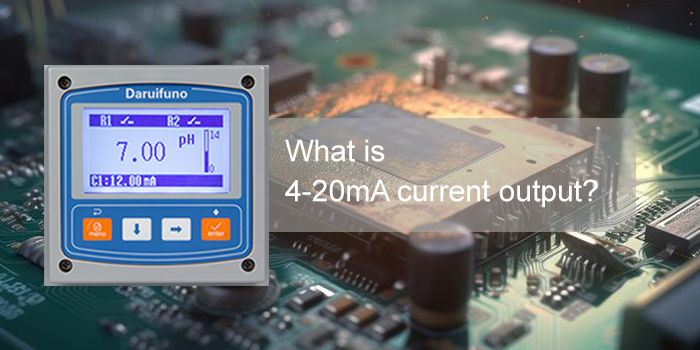
There are two-wire and three-wire systems. Current-type transmitters convert physical quantities into 4-20mA current outputs and require external power supplies. A typical four-wire transmitter necessitates two power lines and two current output lines. However, sharing a wire between current output and power supply can save one wire, leading to the term "three-wire transmitter" for what is essentially a four-wire transmitter with this optimization. Notably, the 4-20mA current itself can power the transmitter, which acts as a special load in the circuit. Such transmitters only require two external wires and are thus termed two-wire transmitters.
?
The 4-20mA analog output is extensively employed in the transmission and reception of transmitter signals within industrial control. Transmitters convert sensor-generated signals into 4-20mA current signals for transmission, covering temperature, pressure, flow rate, and other physical parameters, as well as chemical parameters from analytical instruments.
The pH/ORP controllers, conductivity controllers, dissolved oxygen controllers, turbidity controllers, COD controllers, and other products developed and produced by DOSZ all feature two channels of 4-20mA current output, enabling users to output data via 4-20mA analog signals. In addition to 4-20mA analog signals, our online water analyzers also provide RS485 digital signals. For more information about our products, please feel free to contact us.

September 25, 2024

August 27, 2024

November 07, 2023

October 20, 2023
In the field of water quality monitoring and analysis, DOSZ's water quality instrument development team has stringent requirements on the performance of sensors, especially for waterproof...
Overview As a high-precision water quality monitoring device, the signal detection process of fluorescent dissolved oxygen sensor involves knowledge and technology in multiple fields such as optics,...
Introduction to Electrode Glass Membrane The electrode glass membrane, a critical component in pH electrodes, possesses a series of unique properties that make it suitable for use in harsh...
Overview Water quality is a critical factor in environmental protection, industrial processes, and public health. Effective monitoring and control help maintain safe drinking water, optimize...
Email to this supplier
September 25, 2024
August 27, 2024
November 07, 2023
October 20, 2023
About Us
Related Products List
Contact Us

Send Inquiry
Privacy statement: Your privacy is very important to Us. Our company promises not to disclose your personal information to any external company with out your explicit permission.
Fill in more information so that we can get in touch with you faster
Privacy statement: Your privacy is very important to Us. Our company promises not to disclose your personal information to any external company with out your explicit permission.