Home> Company News> What is an Analog ORP Sensor

What is an Analog ORP Sensor

2024,08,23
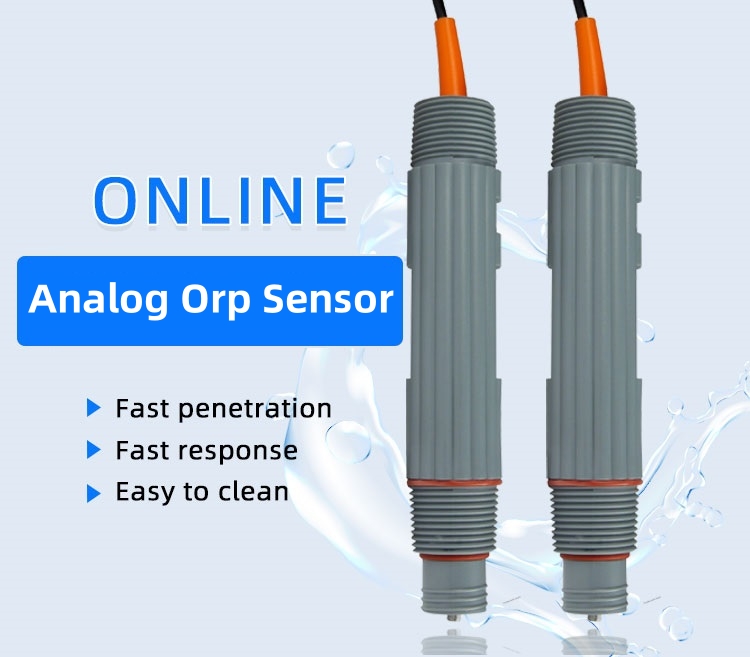
The analog ORP Sensor is the core component of the ORP analyzer for detecting water quality. So what exactly is it? Let's briefly discuss it.
In the field of environmental protection and water quality management, the oxidation-reduction potential (ORP) sensor, as a key device, plays a vital role. Although digital ORP sensors are favored for their high precision, stability and intelligent design, analog ORP sensors also have their unique value and application scenarios. This article will explore the working principle, characteristics and applications of analog ORP sensors in depth.
Analog Orp Sensor
1. Working principle of analog ORP sensor
The analog ORP sensor is based on the potentiometric measurement principle of redox reaction. When two substances with different redox abilities react on the electrode, a potential difference, namely the ORP value, is generated. This potential difference is detected by the electrode system inside the sensor and converted into a readable analog electrical signal output. The core components of the analog ORP sensor mainly include the working electrode and the reference electrode. The working electrode is usually made of precious metals (such as platinum or gold), participates in the redox reaction and generates a potential signal; while the reference electrode provides a stable potential reference point for calibrating and measuring the potential of the working electrode.
2. Characteristics of analog ORP sensors
Cost-effectiveness: Compared with digital ORP sensors, analog ORP sensors have more cost advantages, especially suitable for projects or small and medium-sized enterprises with limited budgets.
Compatibility: Analog ORP sensors are compatible with a variety of analog signal receiving devices, such as traditional data loggers and control systems, which is convenient for users to integrate the system.
Stability: Although digital sensors are more advanced in intelligence and automation, analog ORP sensors also perform well in stability and durability, and are suitable for long-term monitoring tasks.
Easy to maintain: The maintenance of analog sensors is relatively simple, and users can perform maintenance and calibration through standard calibration procedures without complicated settings and debugging.
3. Application of analog ORP sensors
Water quality monitoring: Analog ORP sensors are widely used in water quality monitoring in the fields of surface water, groundwater, drinking water and wastewater treatment. By measuring the ORP value of the water body, the redox state of the water body can be evaluated, and then it can be determined whether the water quality is polluted or whether the treatment effect is up to standard.
Industrial production: In industries such as chemical, pharmaceutical, and food processing, analog ORP sensors are used to monitor water quality changes during production to ensure product quality and production safety. For example, in the pharmaceutical industry, by monitoring the ORP value of the reaction liquid, the progress of the chemical reaction and the quality of the product can be accurately controlled.
Environmental protection: In the field of environmental protection, analog ORP sensors are used to monitor pollution source emissions, water ecological restoration, and wetland protection. By real-time monitoring of the ORP value of the water body, environmental pollution problems can be discovered and responded to in a timely manner to protect the ecological environment and public health.
4. Summary
As an important tool for water quality monitoring, analog ORP sensors have the advantages of cost-effectiveness, compatibility, stability, and easy maintenance. Although not as advanced as digital sensors in terms of intelligence and automation, they still play an irreplaceable role in many practical application scenarios. With the continuous advancement of technology and the gradual reduction of costs, analog ORP sensors will be applied and developed in a wider range of fields.
For users who need water quality monitoring solutions, it is crucial to choose a suitable ORP sensor. Whether it is an analog or digital sensor, it should be selected according to specific needs and conditions, and attention should be paid to the maintenance and maintenance of the equipment to ensure the accuracy and reliability of the measurement results.
Contact Us

Author:

Ms. Selena

Phone/WhatsApp:

++86 18013144571

Popular Products
You may also like
Related Information
Daruifuno Sensor & Probe-Pressure and Waterproof Test

In the field of water quality monitoring and analysis, Daruifuno's water quality instrument development team has stringent requirements on the performance of sensors, especially for waterproof...

Signal detection and temperature compensation calibration of fluorescent dissolved oxygen sensor

Overview As a high-precision water quality monitoring device, the signal detection process of fluorescent dissolved oxygen sensor involves knowledge and technology in multiple fields such as optics,...

The Characteristics and Applications of Electrode Glass Membrane

Introduction to Electrode Glass Membrane The electrode glass membrane, a critical component in pH electrodes, possesses a series of unique properties that make it suitable for use in harsh...

Water Quality Monitoring and Control: Optimizing Water Treatment with Sensors

Overview Water quality is a critical factor in environmental protection, industrial processes, and public health. Effective monitoring and control help maintain safe drinking water, optimize...

Related Categories

Email to this supplier

Subject:
Email:
Message:

Your message must be between 20-8000 characters

We will contact you immediately

Fill in more information so that we can get in touch with you faster

Privacy statement: Your privacy is very important to Us. Our company promises not to disclose your personal information to any external company with out your explicit permission.

Send