

Send Message
Privacy statement: Your privacy is very important to Us. Our company promises not to disclose your personal information to any external company with out your explicit permission.
 Suzhou Delfino Environmental Technology Co., Ltd.
Select Language
English
In aquaculture, maintaining proper oxygen levels is one of the most critical factors for ensuring healthy fish growth and preventing disease. Dissolved oxygen (DO) directly influences fish metabolism, feed conversion rates, and overall water quality. Using a water Dissolved Oxygen Sensor allows farmers to monitor oxygen levels in real time, enabling timely adjustments that maximize efficiency and yield in aquaculture operations.
?
Fish and other aquatic species rely on dissolved oxygen for respiration. When DO levels drop below critical thresholds, it can cause stress, reduce appetite, increase disease risk, and even lead to mortality. Factors such as temperature, feed residue, and algal activity can quickly alter oxygen levels, making constant monitoring essential.
Step inside a modern aquaculture fish pond where clear waters reveal a critical balance—or imbalance—between aquatic life and algae levels. This footage captures schools of fish swimming actively in a pond with visibly sparse algae growth, highlighting a common challenge in farming: low algal biomass directly correlates with reduced natural oxygen production. Without sufficient algae to photosynthesize and replenish dissolved oxygen (DO), the ecosystem faces risks of oxygen depletion, especially during nighttime or high-density feeding periods. Watch as the video underscores the delicate interplay between algae management, water quality, and fish welfare—a vital lesson for farmers striving to maintain healthy, productive ponds. Learn why monitoring dissolved oxygen and regulating algal populations are essential to preventing stress, disease, and economic loss in aquaculture operations.
?
Water dissolved oxygen sensors provide continuous, accurate measurements of oxygen levels in ponds, tanks, or net cages. These sensors can be integrated with automated control systems to adjust aerators or oxygen injectors based on real-time readings, ensuring that oxygen stays within optimal ranges.
?
When selecting a water dissolved oxygen sensor for aquaculture, consider sensor durability, maintenance requirements, depth range, and communication interface (e.g., RS485, 4–20mA). Optical DO sensors are commonly preferred due to their long lifespan and stable performance in outdoor pond environments.
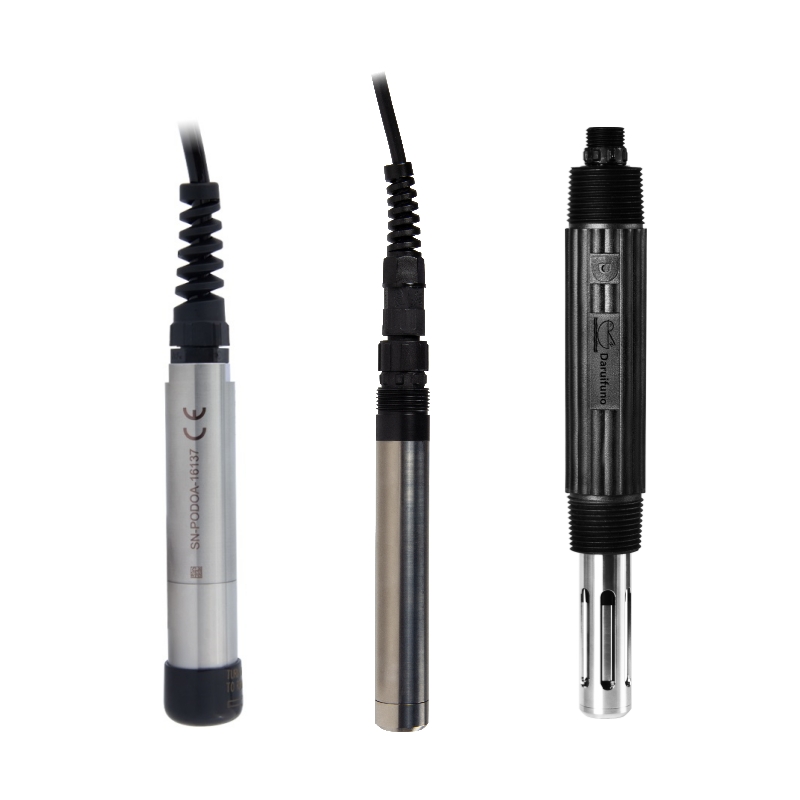
?
With the increasing demand for efficient and sustainable aquaculture, investing in a reliable water dissolved oxygen sensor?can significantly enhance productivity and reduce operational risks. These sensors are now a key part of modern fish farming technology.
If you would like to explore more about high-performance DO monitoring for aquaculture, please visit our water dissolved oxygen sensor category page for product information and technical support.
September 25, 2024
August 27, 2024

November 07, 2023
October 20, 2023
In the field of water quality monitoring and analysis, Daruifuno's water quality instrument development team has stringent requirements on the performance of sensors, especially for waterproof...
Overview As a high-precision water quality monitoring device, the signal detection process of fluorescent dissolved oxygen sensor involves knowledge and technology in multiple fields such as optics,...
Introduction to Electrode Glass Membrane The electrode glass membrane, a critical component in pH electrodes, possesses a series of unique properties that make it suitable for use in harsh...
Overview Water quality is a critical factor in environmental protection, industrial processes, and public health. Effective monitoring and control help maintain safe drinking water, optimize...
Email to this supplier
September 25, 2024
August 27, 2024
November 07, 2023
October 20, 2023
About Us
Related Products List
Contact Us

Send Inquiry
Privacy statement: Your privacy is very important to Us. Our company promises not to disclose your personal information to any external company with out your explicit permission.
Fill in more information so that we can get in touch with you faster
Privacy statement: Your privacy is very important to Us. Our company promises not to disclose your personal information to any external company with out your explicit permission.