
 Contact Now

Send Message
Privacy statement: Your privacy is very important to Us. Our company promises not to disclose your personal information to any external company with out your explicit permission.
 Suzhou Delfino Environmental Technology Co., Ltd.
Select Language
English



| Measuring range | |
| option | |
| Contact Now |


In water, each substance has independent redox properties. On a microscopic level, each different substance has a certain redox ability. These substances with different redox properties can interact with each other and ultimately constitute a certain macroscopic redox property. . If the potential is positive, it means that the solution shows certain oxidizing properties, and if it is negative, it means that the solution shows certain reducing properties. The ORP Sensor is an online instrument used to measure the ORP value of water quality. In the aquaculture industry, it is very necessary to monitor the ORP value of water quality. The oxidation-reduction potential value measured by the ORP Probe can be used to judge the quality of the aquaculture water, and then take effective measures to improve the survival rate of aquaculture and bring economic benefits.?Common substances in the oxidized state in water include: oxygen, sulfate, nitrate, phosphate and iron ions, manganese ions, copper ions, zinc ions, etc.; substances in the reduced state: chloride ions, nitrogen, ammonia nitrogen, nitrate Nitrate, hydrogen sulfide, methane, ferrous ions, most organic compounds, including bait, feces, organic matter sludge at the bottom of the pond, etc.
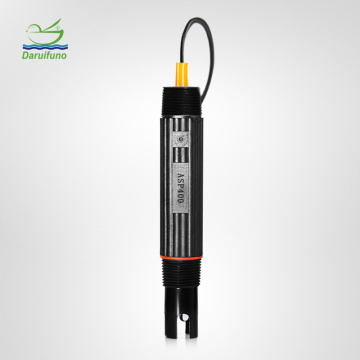
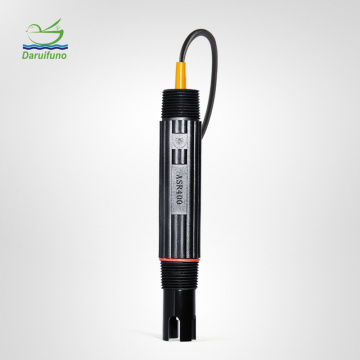
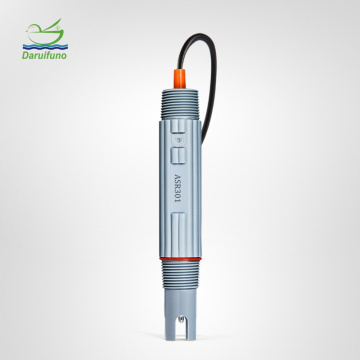
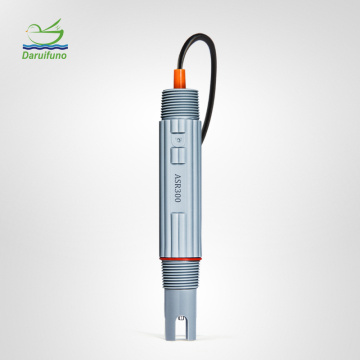
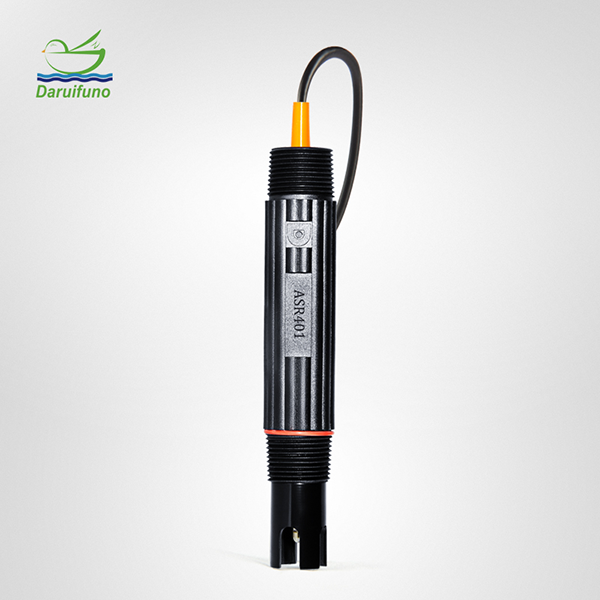
Specification of the ORP sensor
| Product Name | ORP probe |
| Measuring Range | -2000mV~+2000mV |
| Working Pressure | 0~6Bar |
| Operating Temperature | 0~100℃ |
| Material | PPS+PTFE+platinum ring? platinum sheet |
| Zero(E0) ORP | ±20mV |
| slope(SLOP)% | >95% |
| flow rate | 0.5m/s≥flow rate≥0.001m/s |
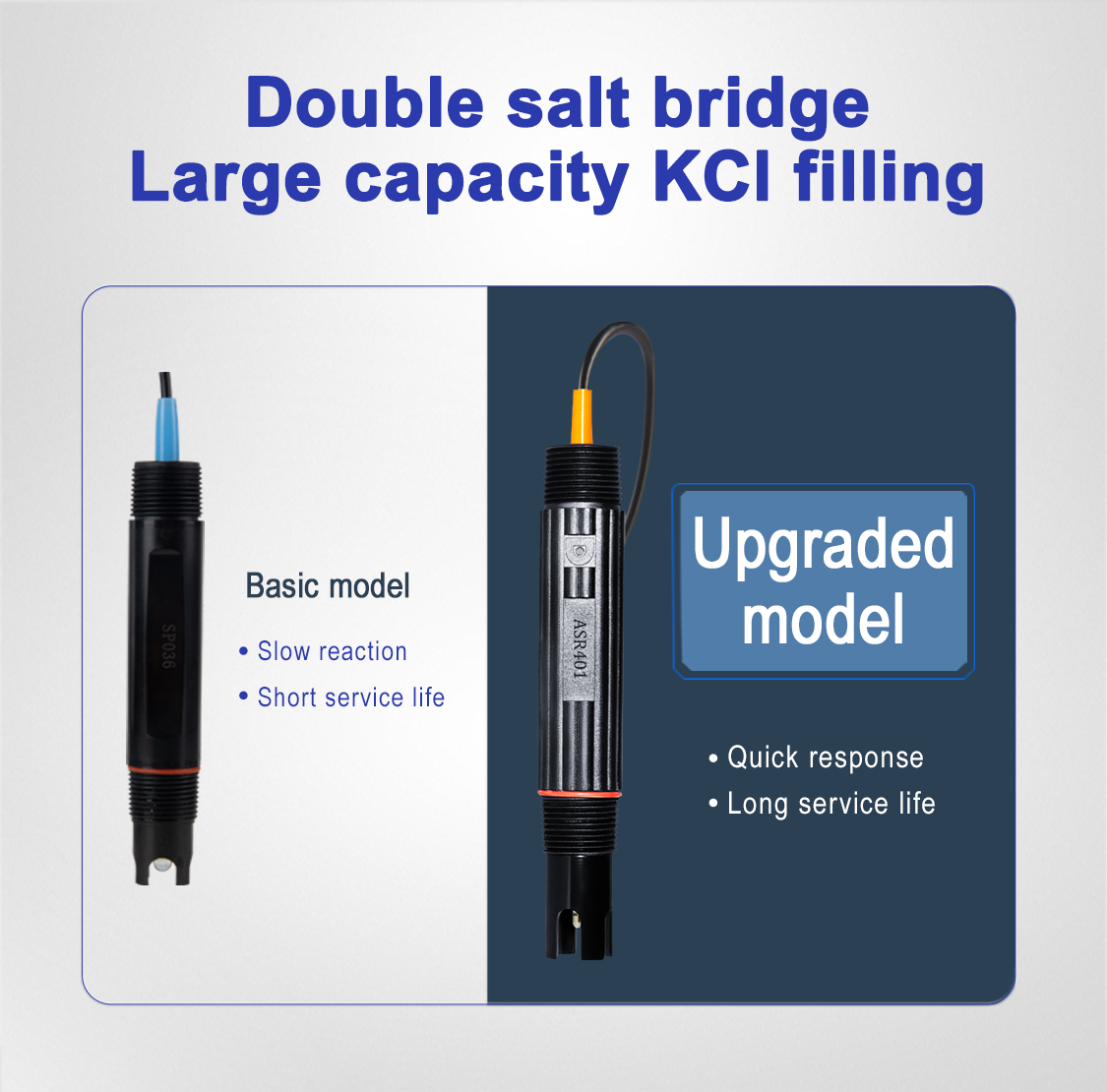
| Reference System | Ag/AgCl, double salt bridge, KCL crystal |
| Dimensions | Diameter 35mm/Total length 200 mm |
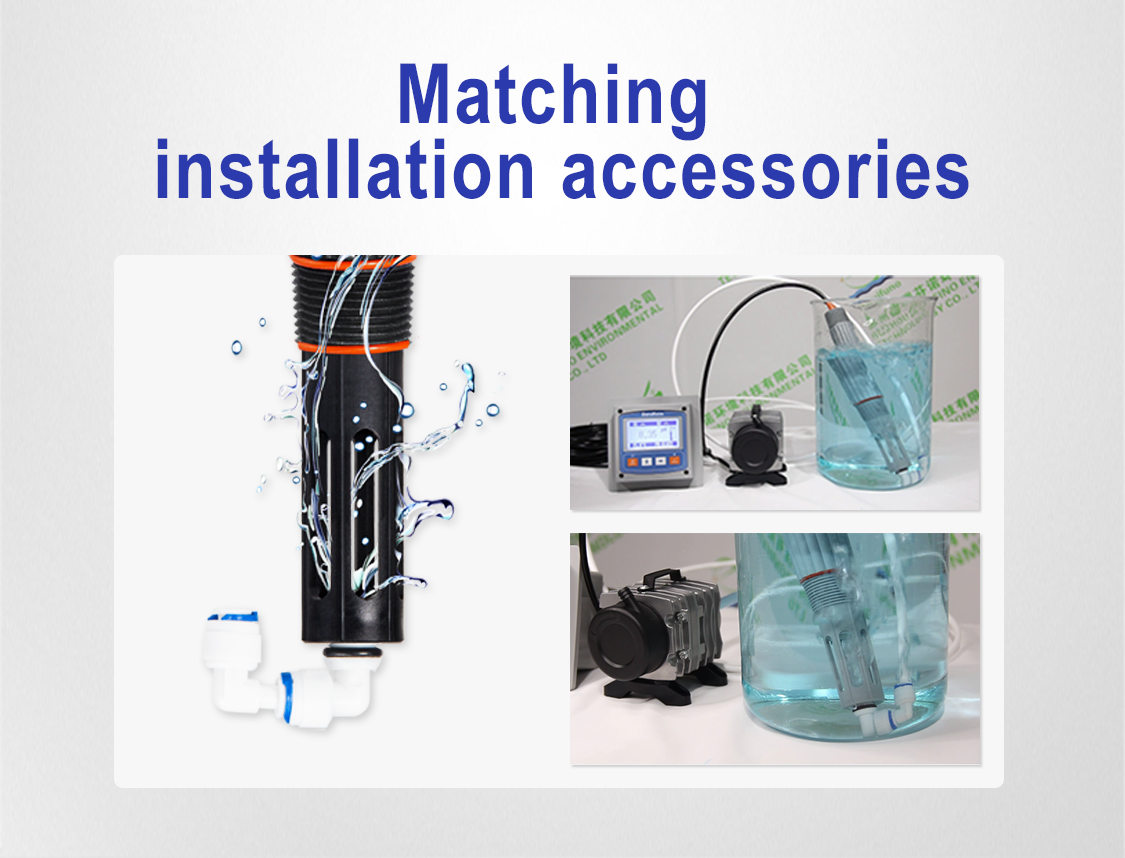
| Installation Dimensions | A British 1 NPT of the head and the tail for each install thread |
| Signal Lead | default 5 meters, Support orders within 60 meters |
The measured value of the redox potential of seawater and freshwater systems is usually about 0.4V. Aerobic microorganisms generally live above 100mV, with 300~400mV being the most suitable. Substances in the oxidized state can be reduced under appropriate conditions. For example, non-toxic nitrate is reduced to toxic nitrite and ammonia nitrogen. Substances in the reduced state can also be oxidized under appropriate conditions. For example, hydrogen sulfide is oxidized to Sulfate. The measuring range of ORP sensor is -2000mV~+2000mV, can meet large measuring range requirements.
As the redox power decreases, iron and manganese respiration occurs. When the dry pond is drying in the pond, it is oxidized to trivalent iron, and is gradually reduced to divalent iron. This process consumes oxygen and produces acid, so the pH value of the sediment decreases. The redox potential continues to decrease. When the redox potential environment is -200~250mV, obligate anaerobic microorganisms grow, and sulfate-reducing bacteria perform sulfur respiration. The originally existing sulfate radicals are reduced to hydrogen sulfide, and hydrogen sulfide and ferrous ions, Manganese ions react to generate FeS and MnS, and the soil turns black. When the redox potential environment is -300~-400mV, the sediment is in an extremely hypoxic state, and obligate anaerobic methanogenic bacteria begin to decompose organic matter in the sediment to produce methane. In ponds with thick silt, bubbles appear on the water surface after being poked with bamboo poles. This bubble is the methane produced by the bottom mud. Generally speaking, if the redox potential of natural water or aquaculture pond water is around 0.4V, it can be considered that the water body is in a good oxidation state.
Therefore, the deterioration of the water quality is as follows: ammonia nitrogen and nitrite are produced - hydrogen sulfide is produced - the bottom of the pool becomes black and smelly. If we change the bottom quality and adjust the water, we have to wait until the ammonia nitrogen and nitrite are not released or there is very little. Start right away. Don’t wait for the bottom mud to turn black and smelly before you think it’s a sign of deterioration. The redox potential objectively reflects the quality of the aquaculture water body, is a leading indicator of water quality changes, and can have an early warning function. Using the ORP sensor to measure, the oxidation-reduction potential is decreasing, indicating that the water quality is deteriorating, reminding us to pay attention, increase oxygen, change the bottom, increase the potential, and do not let ammonia nitrogen, nitrite, and hydrogen sulfide come out.
In addition, our company also has an online ORP controller equipped with ORP electrodes, equipped with two SPST relays and two 4-20mA currents, which can control dosing or oxygenation. Delfino company focuses on the R&D and production of water quality analysis instruments. Our measurement parameters include pH, ORP, conductivity, TDS, salinity, dissolved oxygen, COD, ammonia nitrogen, turbidity, chlorophyll, blue-green algae, residual chlorine, and chlorine dioxide. wait. In addition to ORP sensors, our main products include pH ORP analyzer, conductivity analyzer, turbidity analyzer, COD analyzer, dissolved oxygen analyzer, ammonium analyzer, chlorine analyzer, etc.
About Us
Related Products List
Contact Us

Send Inquiry


Privacy statement: Your privacy is very important to Us. Our company promises not to disclose your personal information to any external company with out your explicit permission.
Fill in more information so that we can get in touch with you faster
Privacy statement: Your privacy is very important to Us. Our company promises not to disclose your personal information to any external company with out your explicit permission.