
 Contact Now

Send Message
Privacy statement: Your privacy is very important to Us. Our company promises not to disclose your personal information to any external company with out your explicit permission.
 Shenzhen DOSZ Technology Co., Ltd.
Select Language
English



| Measuring range | |
| option | |
| Contact Now |


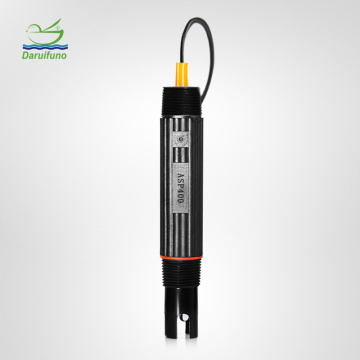
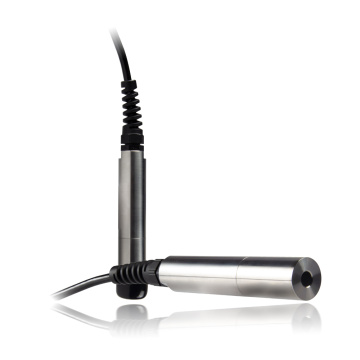
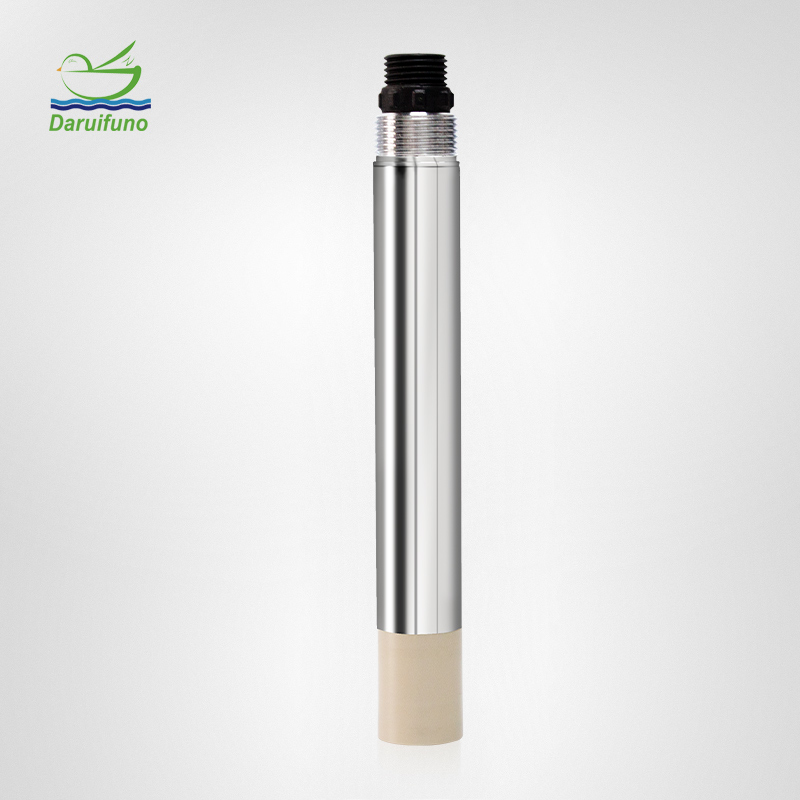
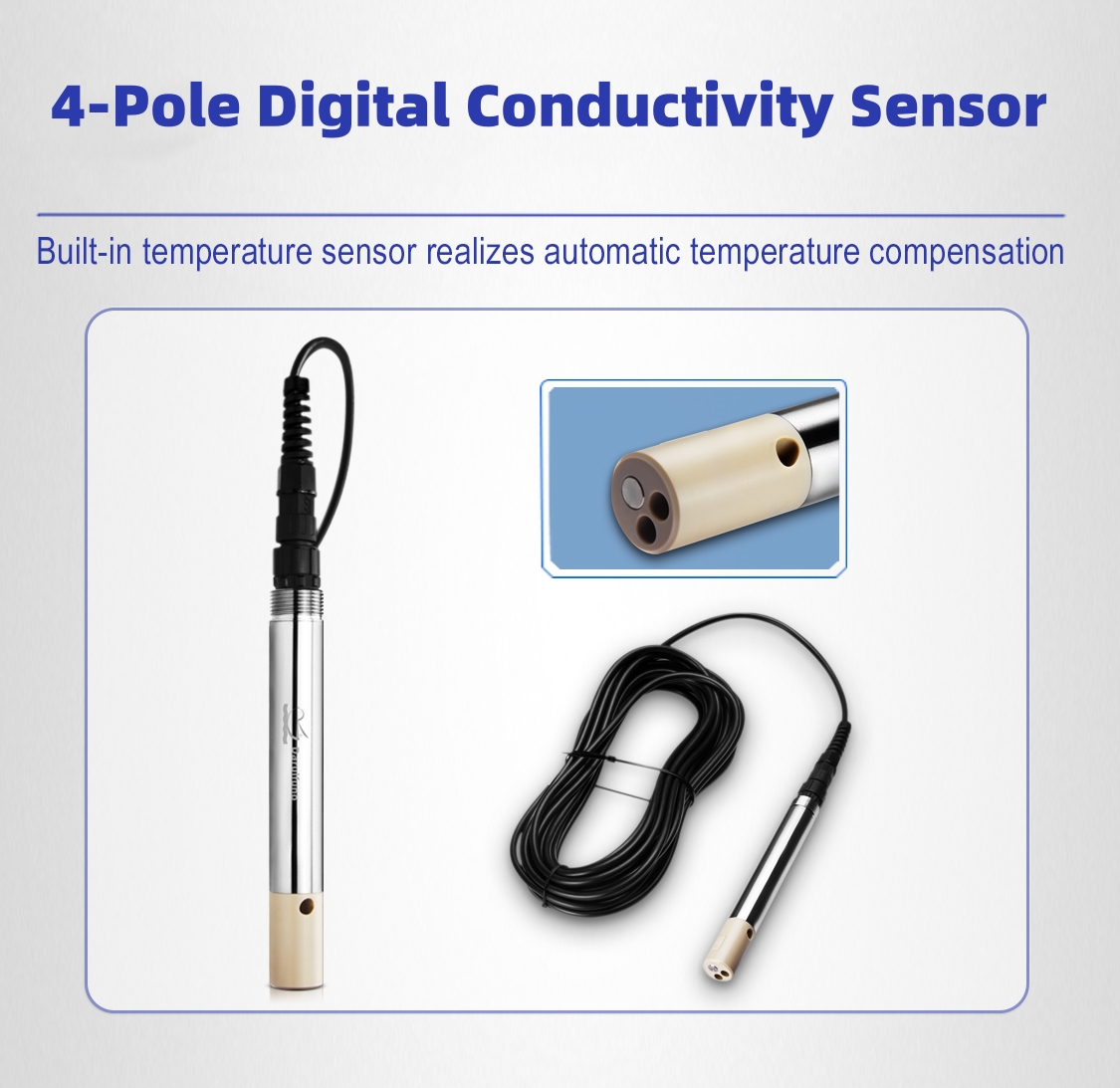
DOSZ's 4-pole Digital Conductivity Sensor has stable measurement performance and can be used for real-time measurement of seawater conductivity. There are two common measurement methods for conductivity sensors used to monitor seawater: electrode type and inductive type. In fact, electrode type conductivity sensors must have four electrodes to meet a wider monitoring range. Compared with two-pole sensors, four-pole sensors have two pairs of electrodes, one pair is current electrodes and the other pair is voltage electrodes.
| Product Name | ?4-pole Digital Conductivity Sensor |
| Measuring Range | conductivity: 0.001~200mS/cm salinity: 0~80ppt Temp.:0~50℃ |
| Accuracy | ±1%FS |
| Resolution | 0.1uS/cm |
| Temperature Compensation | Automatic, built-in temperature unit |
| Communication | Modbus RTU, RS485 interface |
| Calibration Method | Contrast Bias Correction; Factor Correction |
| Working Pressure | 0~6Bar |
| Operating Temperature | 0~50℃ |
| Power Supply? | 6~12V DC |
| Shaft Material | Ti+PEEK+Nickel |
| Dimensions | Diameter 22mm/length 180 mm |
| Installation | Submersible; Thread specifications: M22*1.5mm |
| Protection Grade | IP68 |
?
The main factors that affect solution conductivity measurement are: temperature and polarization effect. The increase in temperature will directly affect the ionization constant of the electrolyte, causing its ionization constant to increase. In addition, the increase in temperature will also accelerate the thermal motion of ions, increase the conductivity, and directly affect the conductivity of the solution. Therefore, the DEC360 conductivity sensor has a built-in temperature sensor and can perform temperature compensation. The principle of the electrode measurement method is to measure the resistance of the solution between two parallel plates and then convert it into a conductivity value. When ions in the solution move in the electric field between the plates of the measuring electrode, a polarization electromotive force opposite to the direction of the external electric field will be generated, which will hinder the movement of ions in the electric field, and the equivalent result will be on the original resistance of the solution. A new resistor is attached and tends to increase. In order to avoid polarization interference, a 4-pole conductivity sensor can be better solve the problem. Of course , if the conductivity value is very high, it is recommended to use inductive electrodes, which can completely avoid polarization. You can refer to the ASC200 series ring conductivity sensor.
Desalination is a process that uses devices and equipment to remove salt from seawater and obtain fresh water. The main desalination methods include reverse osmosis RO, multi-stage flash evaporation MSF, multi-effect evaporation MED, pressure steam distillation VC and electrodialysis ED, among which reverse osmosis method is the most used. In the application of seawater desalination, the conductivity measurement range of desalinated water is usually 0~2000μS/cm, and the conductivity range of seawater is 0~100mS/cm. Therefore, different conductivity sensors need to be selected for different water qualities. DEC360 is a four-electrode sensor for seawater conductivity measurement. If you want to measure the conductivity electrode of desalinated water, you can choose our ASCK series two-electrode conductivity sensor, which can achieve accurate measurement of low-range conductivity.
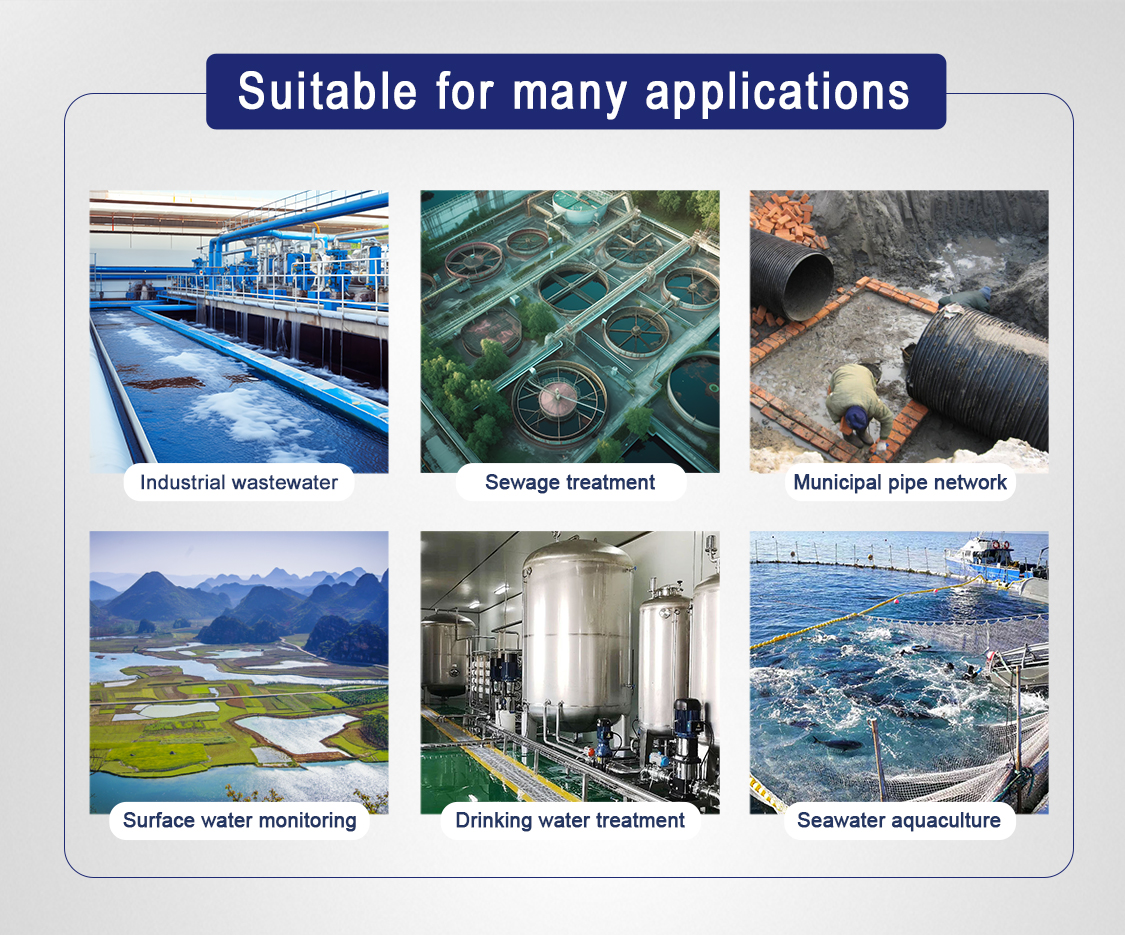
DOSZ focuses on the research and development and production of digital conductivity sensors. Our measurement parameters include conductivity, pH, ORP, TDS, salinity, etc. Our main products include conductivity analyzers, pH ORP analyzers, turbidity analyzers, COD analyzers, dissolved oxygen analyzers, ammonium analyzers, residual chlorine analyzers, etc. In addition to seawater monitoring, conductivity sensors are also widely used in surface water monitoring, drinking water, industrial process monitoring, aquaculture and other industries. If you are interested in conductivity sensors, please contact us.
About Us
Related Products List
Contact Us

Send Inquiry


Privacy statement: Your privacy is very important to Us. Our company promises not to disclose your personal information to any external company with out your explicit permission.
Fill in more information so that we can get in touch with you faster
Privacy statement: Your privacy is very important to Us. Our company promises not to disclose your personal information to any external company with out your explicit permission.