Overview
Online Conductivity Sensor, also known as
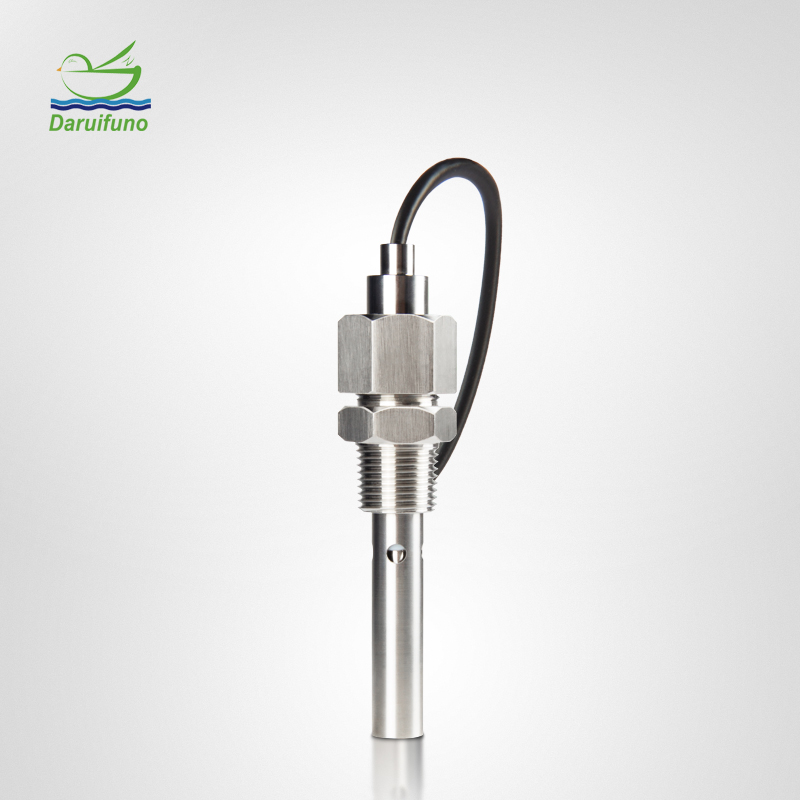
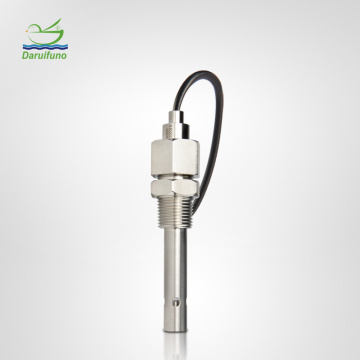
Online Conductivity Probe, is an important device for online measurement and control of water conductivity. The ASCK-0.01 Online
Conductivity Sensor and Probe, developed by DOSZ, necessitates the use of an online
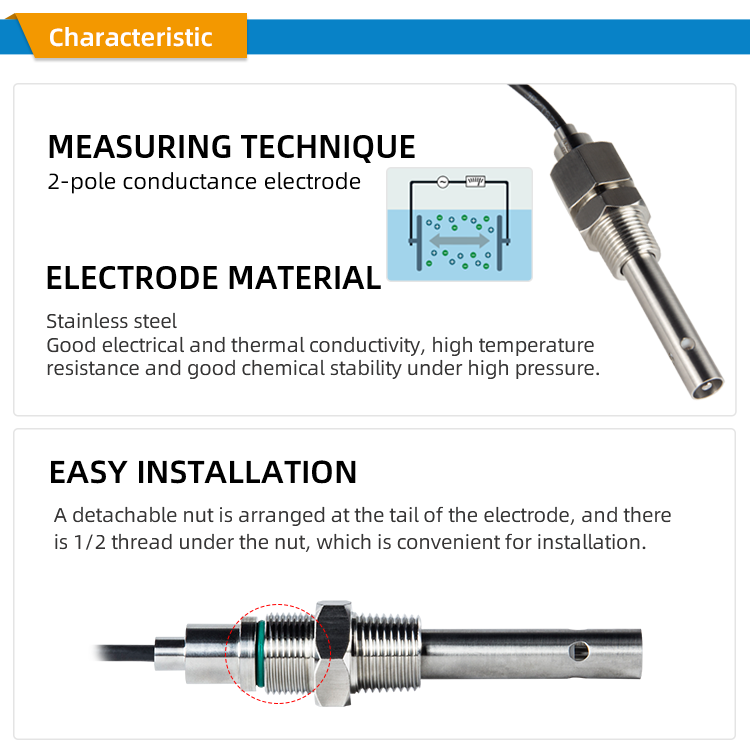
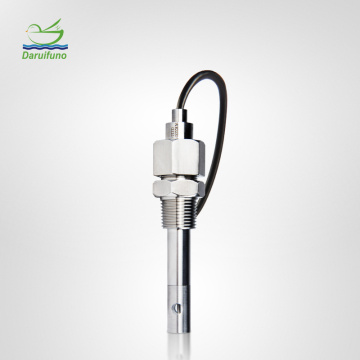
Conductivity Controller to continuously monitor conductivity values in real time, specifically designed for ultrapure water. Constructed from 316L stainless steel, it boasts a conductivity measurement range of 0.05~20μS/cm and incorporates advanced features such as a K constant of 0.01 for high accuracy, temperature compensation via a built-in PT1000 resistor, and easy installation with a 1/2" NPT mounting thread.?
?
?
In theory, absolutely pure water contains only two ions, H+ and OH-, produced by water decomposition. The conductivity of 0.055μS/cm represents the conductivity of a water sample without any impurities at 25°C. The conductivity of ultrapure water is extremely low, making it challenging to measure directly. Therefore, resistivity is often used to express its purity, with resistivity being the reciprocal of conductivity. The conductivity of a water sample is significantly influenced by its temperature. As the temperature rises, ion activity increases, leading to higher conductivity. We typically use the temperature coefficient α to describe the effect of temperature on conductivity. Different media exhibit varying temperature coefficients, with ultrapure water and syrup having higher coefficients, while low-concentration acid-base solutions have relatively lower coefficients.
It's worth noting that the temperature coefficient α of a medium is not constant but varies with temperature. Importantly, the temperature coefficient at any temperature is always referenced to 25°C, meaning α is not the slope of the conductivity-temperature curve at temperature T. Additionally, the temperature coefficient α is influenced not only by temperature but also by medium concentration. To compensate for the impact of temperature on conductivity measurements, the conductivity measurement transmitter must incorporate an automatic temperature compensation circuit. This allows the meter to convert the displayed conductivity to the conductivity at a standard temperature of 25°C. Temperature measurement is handled by a thermistor within the sensor. The higher the accuracy of the thermistor, the more precise the temperature measurement, leading to more accurate conductivity readings after temperature compensation. For ultrapure water, a thermistor with ±0.1°C accuracy is highly recommended. Thus, the high-precision PT1000 temperature resistor integrated into the ASCK-0.01 Online Conductivity Sensor and Probe monitors temperature and facilitates temperature compensation.
?
Conclusion
DOSZ has been dedicated to the research, development, production, and sales of water quality monitors, sensors, probes, and electrodes for over a decade, offering a comprehensive range of controllers, analyzers, and measurement devices tailored for single or multiple parameters such as pH, ORP, conductivity, turbidity, dissolved oxygen, and COD, among others. Beyond online conductivity sensors, we also provide matching conductivity controllers capable of realizing display, control, and output functions. Steadfastly committed to excellence and innovation, DOSZ focuses on advancing water quality analysis instruments, with measurement parameters encompassing TDS, salinity, ammonia nitrogen, chlorophyll, cyanobacteria, residual chlorine, chlorine dioxide, and more. Our meticulously designed products yield precise and dependable results, empowering you to make well-informed decisions in water quality management. Reach out to us today to discover how we can support your efforts in achieving accurate and reliable water quality monitoring.
?




 Contact Now

 Shenzhen DOSZ Technology Co., Ltd.