


 Contact Now

Send Message
Privacy statement: Your privacy is very important to Us. Our company promises not to disclose your personal information to any external company with out your explicit permission.
 Suzhou Delfino Environmental Technology Co., Ltd.
Select Language
English

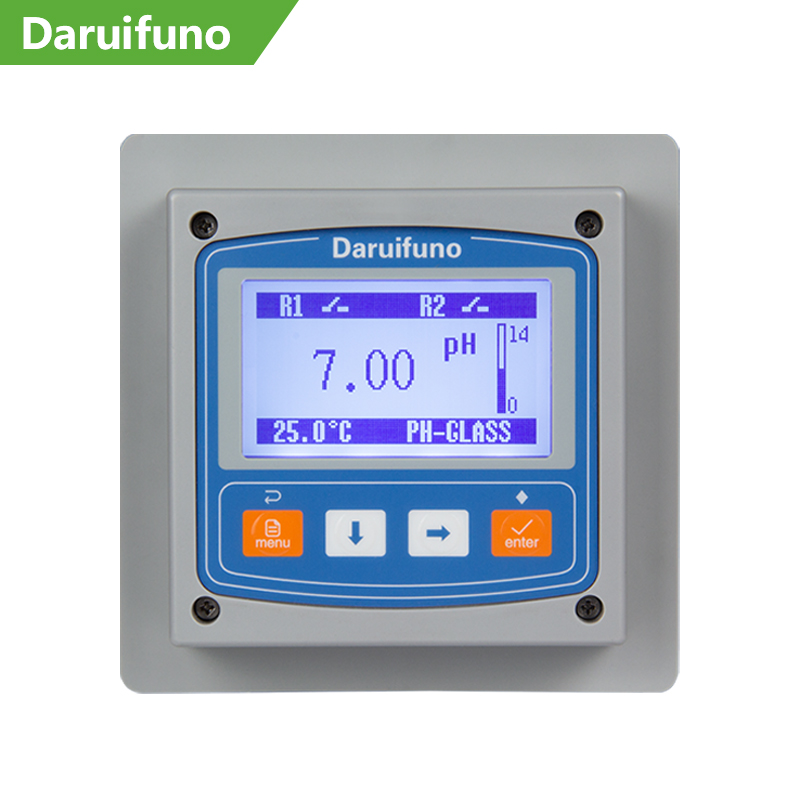


In the intersection of modern production and environmental protection, ORP (Oxidation-Reduction Potential) and pH value stand as two core water quality indicators. Their precise control has become pivotal for ensuring process stability, enhancing efficiency, and safeguarding ecological safety. ORP and pH controllers provide intelligent solutions for water treatment, chemical production, agricultural irrigation, and environmental engineering through real-time monitoring and dynamic adjustment. This article explores the innovative value of this technological system from three perspectives: technical principles, application scenarios, and future trends.

?
ORP reflects the oxidation or reduction capacity of substances in a solution, directly linked to the disinfection efficacy and chemical stability of water bodies. For instance, in wastewater treatment, ORP values must be maintained within specific ranges to ensure microbial activity, while pH values alter hydrogen ion concentrations in solutions, affecting reaction rates and solubility. Together, they act as the "double helix" of chemical equilibrium, jointly determining the comprehensive performance of water bodies.
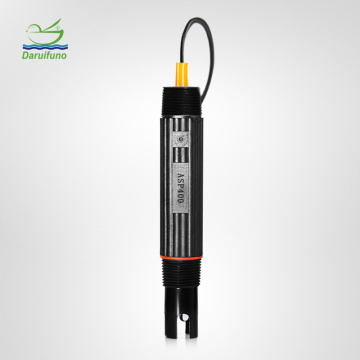
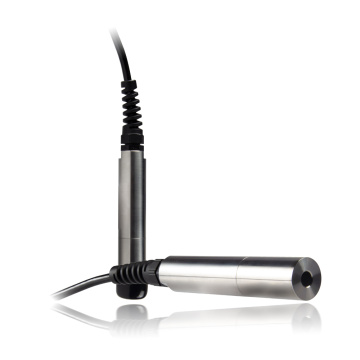
pH controllers monitor acidity/alkalinity in real time using glass electrodes or digital sensors, while ORP sensors measure redox potential based on platinum electrode potential differences. Controllers transmit signals to actuators (e.g., metering pumps, solenoid valves) to dynamically adjust the dosage of chemical agents (e.g., acids, bases, oxidants), forming a closed-loop control system. This automated chain of "sensing-decision-making-execution" significantly improves control precision and response speed.
?
Water Treatment
In drinking water treatment, pH control prevents pipeline corrosion, while ORP monitoring ensures disinfection effectiveness. In wastewater treatment, adjusting pH to neutrality optimizes sedimentation, and ORP control avoids secondary pollution from excessive chemical dosing.
Agriculture and Aquaculture
In greenhouse irrigation systems, pH controllers maintain nutrient solution balance to promote plant nutrient absorption. In aquaculture, ORP monitoring tracks water oxidation states in real time to prevent hypoxia or toxic substance accumulation.
Chemical and Energy Industries
In metal surface treatment and electroplating, coordinated control of pH and ORP directly impacts coating quality and energy consumption. In new energy battery production, pH stability of electrolytes is critical for battery lifespan.
Environmental Protection and Ecological Restoration
In river governance, synergistic regulation of ORP and pH optimizes pollutant degradation efficiency in constructed wetlands. In soil remediation, precise pH adjustment activates microbial activity to accelerate organic decomposition.
Multi-Parameter Integration
Modern controllers support simultaneous monitoring of pH, ORP, temperature, conductivity, and other parameters, with algorithmic models enabling comprehensive regulation. For example, in cooling water systems, when pH anomalies occur, controllers can adjust the dosing ratio of corrosion inhibitors and scale inhibitors.
Intelligent Upgrades
Combined with IoT and AI technologies, controllers can remotely transmit data to cloud platforms for predictive maintenance. Machine learning analyzes historical data to automatically optimize control strategies, such as pre-adjusting parameter thresholds during seasonal water quality fluctuations.
Energy and Environmental Benefits
Precision control reduces excessive chemical usage and operational costs. After introducing an ORP-pH collaborative control system, a wastewater treatment plant reduced chemical consumption by 30% and sludge production by 25%.
With the deepening of Industry 4.0 and smart city concepts, ORP and pH controllers will evolve toward greater integration and scenario-specific applications:
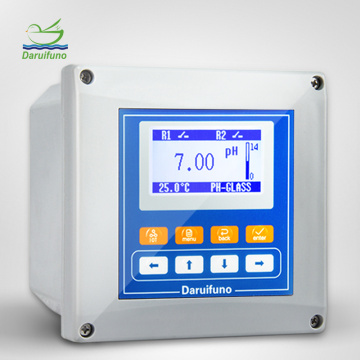
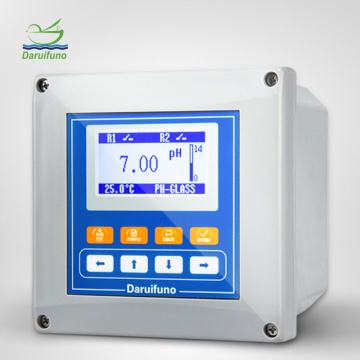
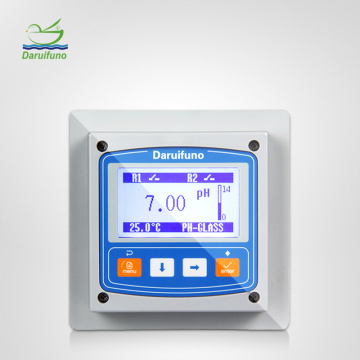
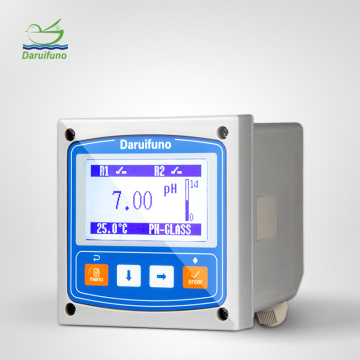
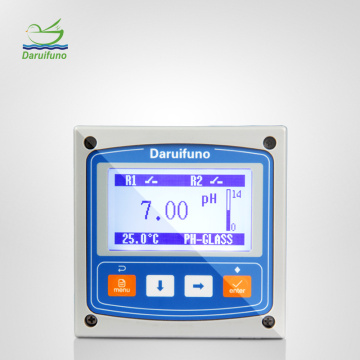
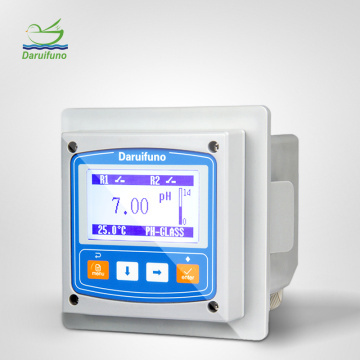
| Product name | ORP and pH Controller |
| Product model | APX1-C1Z |
| Measuring range | pH:0~14pH? ? ORP:±2000mV |
| Resolution | pH: 0.01pH? ORP: 1mV? Temp: 0.1℃ |
| Accuracy | 0.1% of the measuring range or pH ±0.02, ORP ±2mV |
| Relay control | 2 settable SPST relays,max. load 3A/250V AC |
| Current output | A 0/4-20mA current output |
| Digital output | A two-wire RS485 interface, support Modbus protocol |
| Protection grade | IP66 |
| Power supply | 100~240V AC or 18~36V DC |
| Power consumption | about 3 W |
| Operating temperature | 0~60℃ |
| Storage environment | -20~70℃ |
| Meter size | 100*100*120mm |
| Mounting method | panel mounting,mounting hole size 92*92mm |
ORP and pH controllers are not only the "quality guardians" of industrial processes but also the "intelligent brains" of ecological protection. By integrating sensing technology, data analysis, and automation control, this technological system is reshaping the foundational logic of water environmental governance, agricultural production, and chemical manufacturing. In the future, driven by escalating demands for intelligence and greenness, ORP and pH control will penetrate more application scenarios, building a technological cornerstone for sustainable human development.
About Us
Related Products List
Contact Us

Send Inquiry


Privacy statement: Your privacy is very important to Us. Our company promises not to disclose your personal information to any external company with out your explicit permission.
Fill in more information so that we can get in touch with you faster
Privacy statement: Your privacy is very important to Us. Our company promises not to disclose your personal information to any external company with out your explicit permission.