
 Contact Now

Send Message
Privacy statement: Your privacy is very important to Us. Our company promises not to disclose your personal information to any external company with out your explicit permission.
 Shenzhen DOSZ Technology Co., Ltd.
Select Language
English



| option | |
| Contact Now |


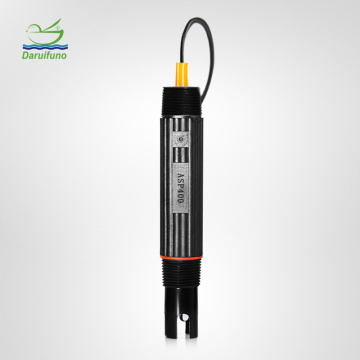
The operating principle of a Conductivity Probe lies in its ability to measure the electrical?conductivity?of a solution contained within a conductivity cell. Conductivity, simply put, is a measure of how well a material conducts electricity. In the context of aqueous solutions, it reflects the presence and mobility of ions in the solution.

The Conductivity Cell and Solution:
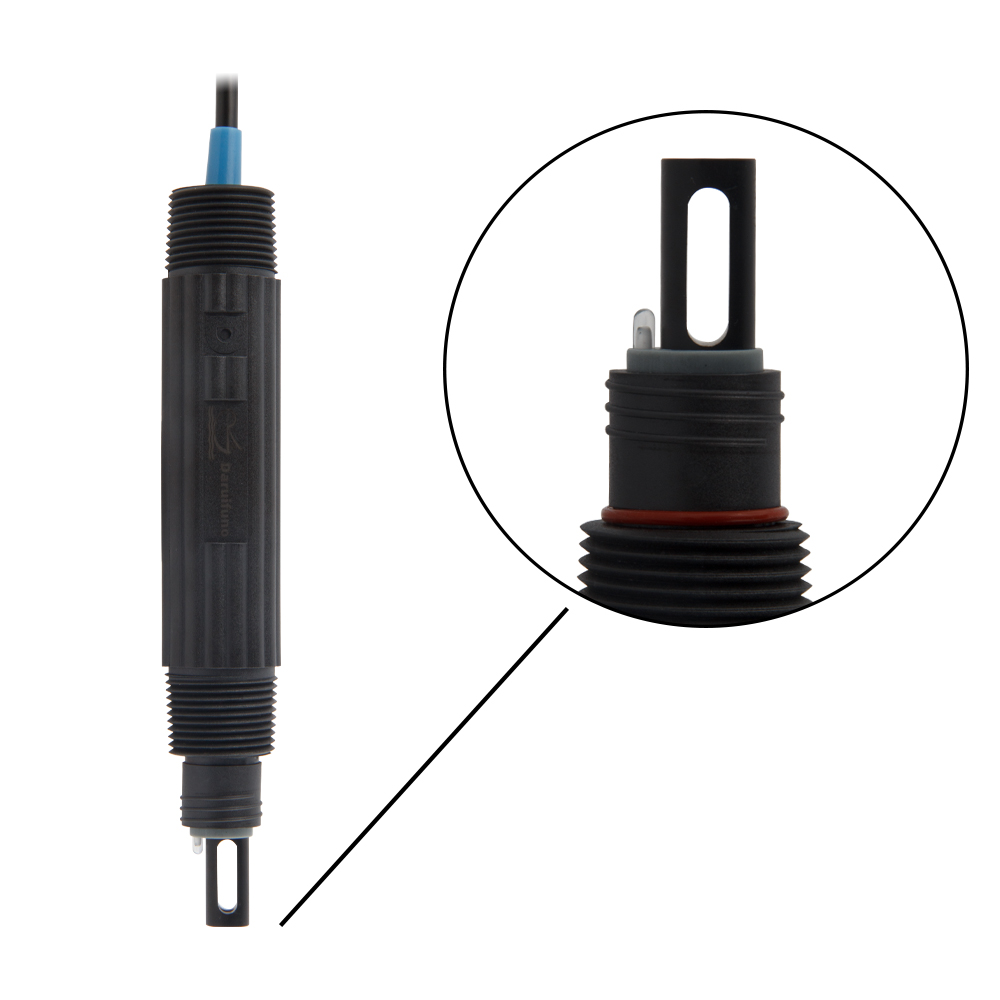
The conductivity probe typically consists of a conductivity cell, which is a specialized chamber designed to hold the solution being tested. This cell has electrodes that are immersed in the solution. The electrodes are made of materials that are both electrically conductive and resistant to corrosion, such as platinum or graphite.
Applying an Electric Current:
An electric current is then applied to the solution through these electrodes. This current flows through the solution as it completes a circuit between the electrodes. The flow of current is facilitated by the ions present in the solution, which migrate towards the oppositely charged electrodes.
Measuring the Current:
The magnitude of the current flowing through the solution is then measured by a conductivity meter, which is connected to the electrodes. This meter is designed to detect and quantify the electrical current with high precision.
Calculating Conductivity:
Conductivity is calculated using the known geometry of the conductivity cell and the applied voltage. The geometry includes factors such as the distance between the electrodes and the cross-sectional area of the cell. Conductivity meters use these parameters to convert the measured current into a conductivity value, typically expressed in units like micromhos per centimeter (μS/cm) or millisiemens per meter (mS/m).
Enhanced Accuracy and Stability with Four-Electrode Design:
Advanced conductivity probes often feature a four-electrode design, which offers several benefits over traditional two-electrode probes. In a four-electrode system, two electrodes are used to apply the electric current to the solution, while the other two are used to measure the voltage drop across the solution. This separation of current-carrying and voltage-sensing electrodes minimizes errors due to polarization effects and electrode resistance, resulting in enhanced accuracy and stability.
Eliminating the Need for Pre-Calibration:
The four-electrode design also often eliminates the need for pre-calibration. In traditional two-electrode probes, calibration is required to compensate for variations in electrode properties and solution conditions. However, in a four-electrode system, these variations are inherently accounted for in the measurement process, providing more reliable results without the need for pre-calibration.
In summary, the operating principle of a conductivity probe involves measuring the electrical current passing through a solution within a conductivity cell, using the known geometry of the cell and applied voltage to calculate conductivity. Advanced probes with a four-electrode design offer enhanced accuracy and stability, simplifying the measurement process and providing more reliable results.
About Us
Related Products List
Contact Us

Send Inquiry


Privacy statement: Your privacy is very important to Us. Our company promises not to disclose your personal information to any external company with out your explicit permission.
Fill in more information so that we can get in touch with you faster
Privacy statement: Your privacy is very important to Us. Our company promises not to disclose your personal information to any external company with out your explicit permission.